Porcelain Veneers in Westwood vs. Crowns: What's the Difference and When You Need Each
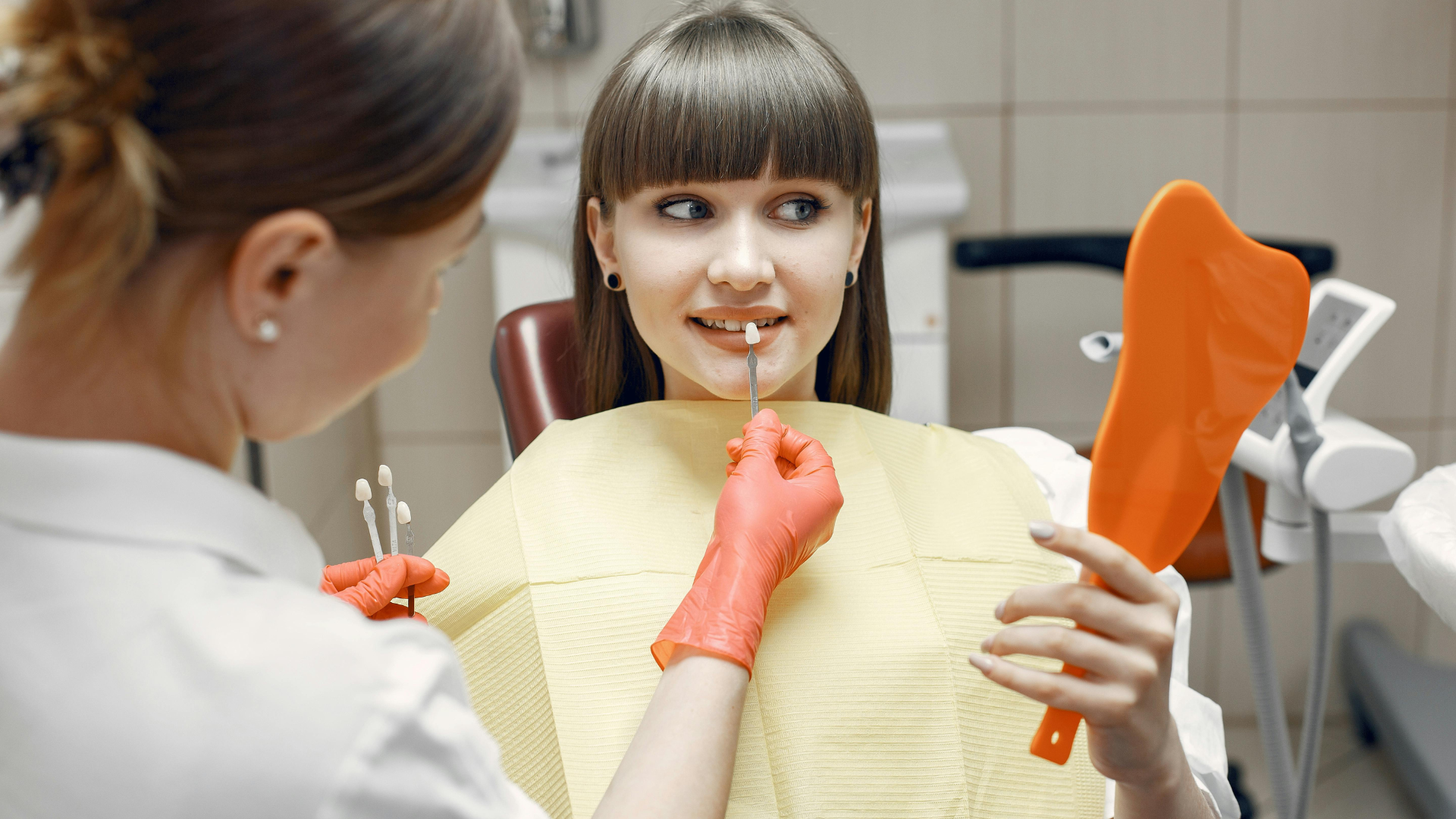
Veneers and crowns can look identical once placed, but they do different jobs. A veneer reshapes the front of a healthy tooth and keeps most of it intact, while a crown rebuilds a damaged tooth and removes far more structure, so the condition of the tooth decides which one you need.
Porcelain veneers cover only the front surface of a tooth to improve its color and shape, while crowns cap the entire tooth to restore strength. Veneers suit healthy front teeth with cosmetic issues; crowns suit teeth that are cracked, heavily filled, or weakened after a root canal.
Quick Answer: If the tooth is strong and you just don't like how it looks, a veneer is usually enough. If the tooth is damaged or weak, it usually needs a crown for full coverage.
Key Takeaways
- Veneers change appearance; crowns change appearance and add strength.
- Lab research found veneer preparations remove roughly 3% to 30% of the visible tooth structure by weight, compared with about 63% to 72% for full crowns.
- A 2025 consensus statement reported ceramic veneer survival rates between 93.7% and 96.8%, depending on the ceramic.
- Many smiles use both: veneers on healthy front teeth and a crown where a tooth needs protection.
Two Treatments That Look Alike From Across the Room
When patients ask me about porcelain veneers in Westwood, they often mention a friend who "got crowns" and looks great. From across a table, the two treatments can look almost identical: bright, smooth, and natural.
The difference shows only when you look at what each does to the tooth underneath. Choosing the wrong one can mean losing tooth structure you didn't need to lose, or leaving a weak tooth unprotected.
What's the Difference Between a Veneer and a Crown?
A veneer is a thin porcelain shell bonded to the front of a tooth, mainly to change its color, shape, or length. A crown is a cap that covers the entire visible tooth, restoring its shape and strength; dentists typically use it when a tooth is damaged, has a large filling, or has lost structure.
The American Dental Association's MouthHealthy guide to crowns describes them as a way to strengthen a tooth with a large filling, protect a weak tooth from breaking, restore a broken tooth, or cover a dental implant. Veneers aren't designed for any of those jobs.
| Factor | Porcelain veneer | Crown |
|---|---|---|
| What it covers | Front surface of the tooth | The entire visible tooth |
| Main purpose | Appearance | Strength and appearance |
| Tooth structure removed | Thin layer of enamel | Much more, on all sides |
| Best for | Healthy front teeth | Cracked, broken, or heavily filled teeth |
| Typical location | Teeth that show when you smile | Any tooth, including molars |
How Much Tooth Does Each One Remove?
Veneers usually remove a thin layer of enamel from the front of the tooth, about half a millimeter in many cases. Crowns require shaping the tooth on all sides so the cap fits, removing much more natural structure that doesn't grow back.
The difference is large. A frequently cited laboratory study, summarized in a clinical review of porcelain veneer survival, found that ceramic veneer preparations removed roughly 3% to 30% of the visible tooth structure by weight, while all-ceramic and metal-ceramic crown preparations removed about 63% to 72%.
A situation I see often is a patient with one darker or chipped front tooth who assumes a crown is the only fix. If the tooth underneath is sound, a veneer gives the same visual result and keeps most of that tooth intact.
That's why I treat a crown on a healthy front tooth as a last resort. If a tooth is strong, keeping more of your natural tooth is almost always the better long-term plan.
When Do You Need Porcelain Veneers?
Porcelain veneers are a strong choice when your front teeth are healthy but you're unhappy with how they look. They can cover stains that whitening won't lift, close small gaps, lengthen short or worn teeth, and even out chips or unusual shapes, all while preserving most of the tooth underneath.
Veneers tend to be the right fit for:
- Gaps between front teeth.
- Severe discoloration or uneven coloring that whitening can't fix.
- Teeth that are smaller than average or pointed.
- Minor chips or surface flaws on otherwise healthy teeth.
Modern porcelain veneers hold up well. A 2025 consensus statement from a joint conference of three restorative and prosthetic dentistry societies reported survival of 96.13% for feldspathic veneers, 93.7% for leucite-reinforced glass-ceramic, and 96.81% for lithium disilicate.
When Is a Crown the Better Choice?
Choose a crown when a tooth needs protection, not just a new look.
Teeth with large old fillings, deep cracks, broken cusps, or significant decay usually need the all-around support a crown provides. The same applies to back teeth after a root canal, which need full coverage to keep chewing safely.
A crown is usually recommended for:
- A tooth with a large filling and little natural structure left.
- A cracked or broken tooth.
- A back tooth after root canal treatment.
- Anchoring a dental bridge or covering a dental implant.
There's also a middle ground. When only part of a tooth is damaged, an inlay or onlay can rebuild the weak section while keeping more healthy structure than a full crown, and our crowns, inlays, and onlays page explains how those options compare.
Can You Have Both Veneers and Crowns in One Smile?
Yes, and it's common.
A smile makeover might use veneers on healthy front teeth and a crown on a tooth that's had a root canal or a large filling. Both can be made in matching porcelain, so the result looks like one consistent smile rather than a mix of treatments.
The planning order matters. If you're considering whitening, it's usually best to do it first, because porcelain doesn't change color once it's placed, so every veneer and crown is then matched to your new shade.
What Happens When You Get Veneers or a Crown at Our Westwood Office?
Both treatments start with an exam and X-rays to ensure your tooth and gums are healthy. For veneers, we lightly shape the front of the tooth, take an impression, and a lab crafts the shells before bonding them in place.
Crowns follow a similar path, usually over two visits with a temporary in between.
Here's how the veneer process typically works at our office:
- Health check. We take X-rays to rule out decay, gum disease, or infection, because the tooth must be healthy first.
- Preparation. We remove about half a millimeter of enamel from the front of the tooth.
- Impression. We record the exact shape of your prepared teeth.
- Lab work. A dental lab crafts your veneers from that impression.
- Bonding. Your dentist bonds your veneers in place and checks the fit and bite.
For a crown, the dentist shapes the tooth on all sides, a temporary crown protects it while the lab makes the final restoration, and the dentist places the permanent crown at the second visit.
Afterward, both veneers and crowns need the same habits: don't chew on ice, pens, or fingernails, and wear a night guard if you grind your teeth. If you play sports, wear a sports guard to protect the porcelain.
Frequently Asked Questions
Are veneers or crowns stronger?
Crowns are stronger for protecting a damaged tooth because they cover it on every side. Veneers are durable on healthy front teeth but aren't meant to hold a weak or broken tooth together, so the stronger choice depends on the tooth's condition, not the material alone.
Can I get a veneer on a tooth with a large filling?
Usually not. Veneers bond best to healthy enamel, and a tooth with a large filling often lacks the strength a veneer needs. In that case, a crown or onlay is typically the safer option, and your dentist can tell you which after an exam and X-rays.
How long do porcelain veneers last?
With good care, porcelain veneers often last many years. A 2025 consensus statement reported survival rates between 93.7% and 96.8%, depending on the ceramic, with grinding and biting hard objects among the main risks.
Does dental insurance cover veneers or crowns?
Crowns are often partly covered when they're needed to restore a damaged tooth. Veneers are usually considered cosmetic, so most plans don't cover them. Check your specific plan and ask our office to review your benefits before treatment.
Can a veneer be replaced with a crown later?
Yes. Because a veneer removes less tooth structure, a veneered tooth can usually be crowned later if it becomes damaged. The reverse isn't possible, since a crown preparation removes structure a veneer would need, which is one more reason to start conservatively.
Do veneers or crowns look more natural?
Both can look very natural when they're made from quality porcelain and matched carefully to your other teeth. Veneers keep more of your natural tooth underneath, which helps with translucency on front teeth, while an all-ceramic crown can closely match neighboring teeth while restoring shape and strength.
The Dentist Behind This Guide
Dr. Joyce M. Truong, DDS, known to patients as Dr. Joyce, is the owner of Dr. Joyce Family and Cosmetic Dentistry in Westwood. She earned her Bachelor of Science from the University of California, Irvine, in 2004 and her Doctor of Dental Surgery from the University of Southern California in 2008.
With nearly two decades in practice, Dr. Joyce has a particular focus on clear aligners and cosmetic dentistry, and she volunteers as a preclinical faculty member at the USC School of Dentistry. She has held an active California dental license since 2008.
The office serves Westwood and West Los Angeles from 1964 Westwood Blvd., #215, Los Angeles, CA 90025, near Santa Monica Boulevard.
Find Out Which One Your Smile Needs
The deciding question is how strong each tooth is. Veneers refresh healthy teeth while preserving most of their structure, and crowns protect teeth that need support, so the right plan starts with an exam of every tooth involved.
If you're weighing veneers, a crown, or both, call our Westwood office at (310) 470-7200 or
request a cosmetic
consultation online.